
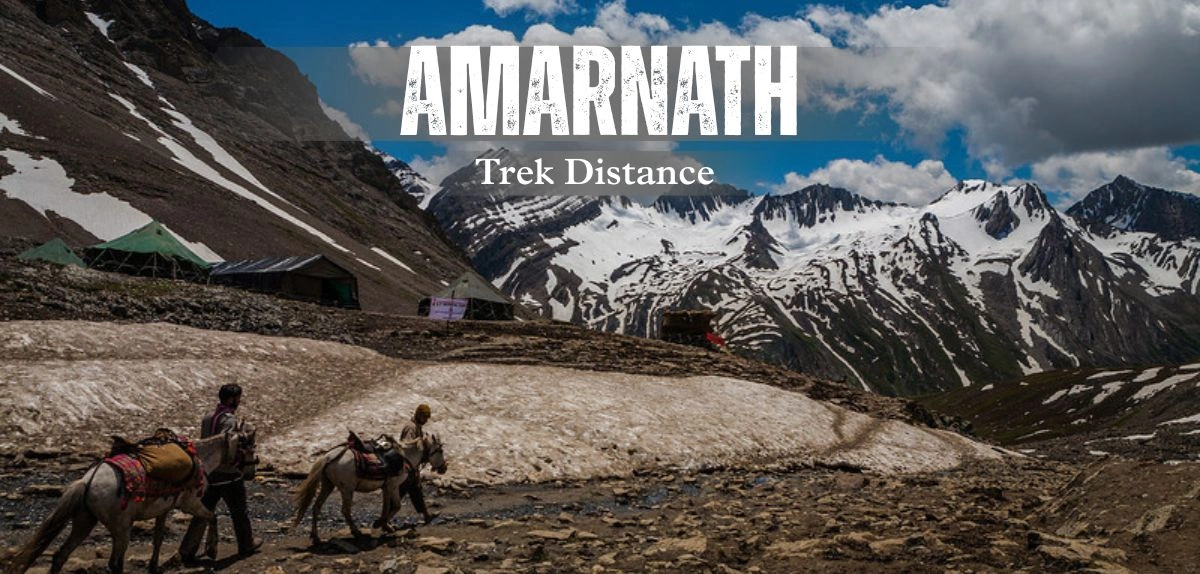
Last Updated: July 17, 2026
So you’ve decided you want to trek up to one of the holiest caves in the Himalayas, and now you’re stuck at 2 AM Googling “Amarnath Trek Distance” trying to figure out exactly how much your knees are about to suffer. Fair enough. We’ve all been there.
Here’s the thing about the Amarnath Trek Distance — it’s not one fixed number. It genuinely depends on which route you pick, how fit you are, and how much you enjoy (or dread) walking uphill for days. So let’s cut through the confusion once and for all, in plain, simple language, with zero unnecessary jargon.
Disclaimer: This article is for general informational purposes only. Yatra dates, registration fees, medical requirements, and route conditions can change year to year, so please verify all details on the official Shri Amarnathji Shrine Board (SASB) website before planning your trip. This content does not replace medical or professional travel advice — consult a doctor before undertaking any high-altitude trek.
Amarnath Yatra: Quick Facts Table
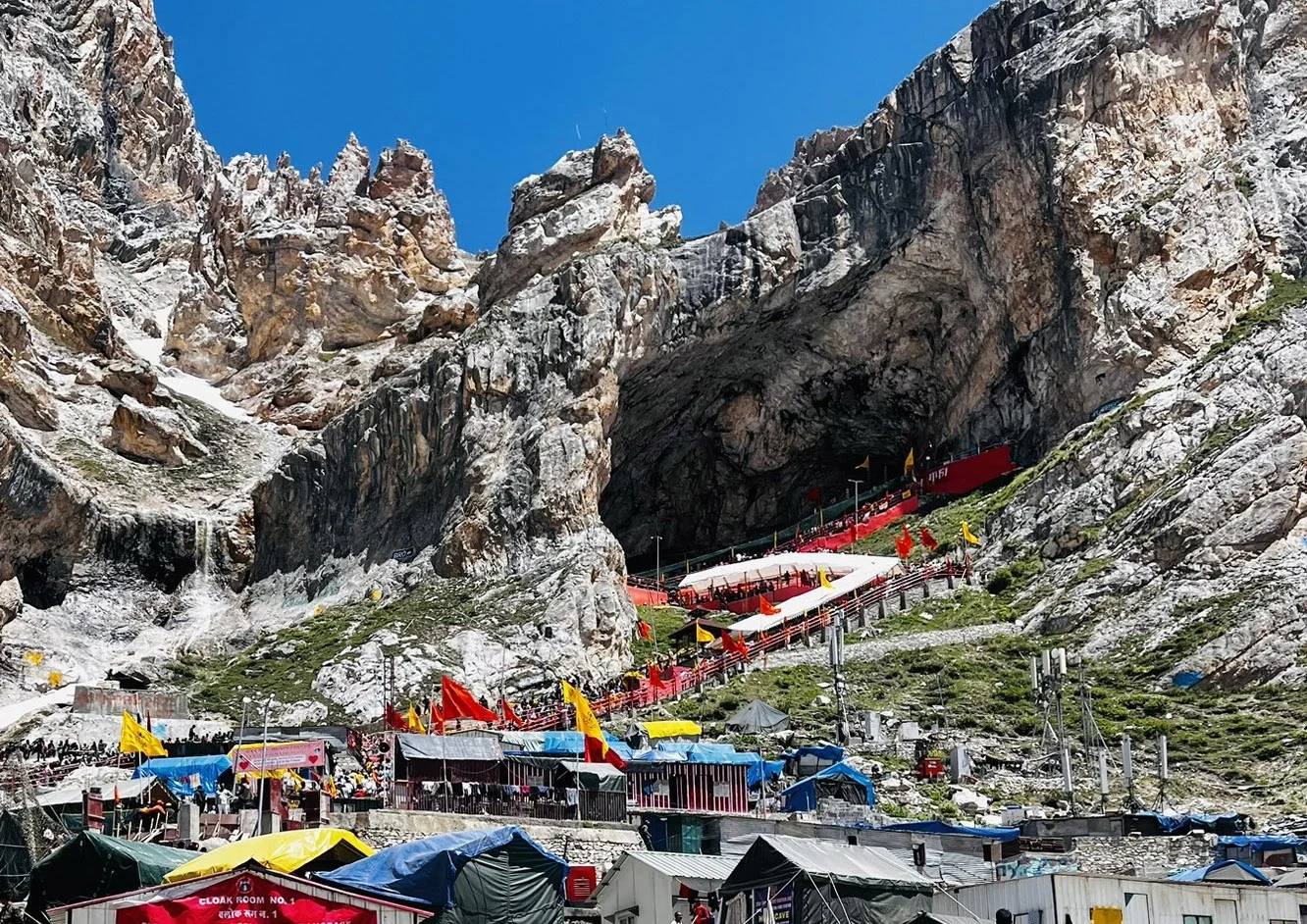
Before we dive into kilometres and altitude gains, here’s a cheat-sheet table so you know exactly what you’re signing up for.
| Detail | Information |
|---|---|
| Pilgrimage Name | Amarnath Yatra |
| Shrine Location | Anantnag district, Jammu & Kashmir |
| Cave Altitude | Around 3,888 metres (12,756 ft) |
| Amarnath Yatra 2026 Dates | July 3 to August 28, 2026 (57 days) |
| Amarnath Yatra 2026 Registration | Opened April 15, 2026, via SASB portal or bank branches |
| Registration Fee | ₹150 per pilgrim (varies slightly by source/year) |
| Baltal Route Distance | Approx. 14 km one-way |
| Pahalgam Route Distance | Approx. 46–48 km one-way |
| Managing Body | Amarnath Shrine Board (SASB) |
Keep this handy. We’ll unpack every single line below, one at a time.
What Exactly Is the Amarnath Trek Distance?
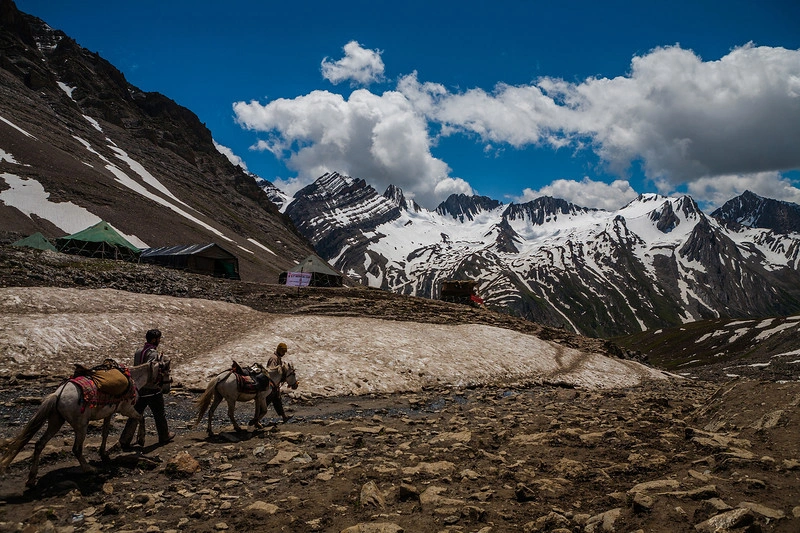
Let’s get straight to the point, because that’s what you’re really here for. The Amarnath Trek Distance isn’t fixed — it depends entirely on which of the two official routes you choose to reach the holy cave.
There are two main paths pilgrims use every year during the Amarnath Yatra:
- The Baltal Route — shorter, but steep and physically demanding.
- The Pahalgam Route — longer, but gentler and more scenic.
Both eventually lead you to the same destination: the sacred Amarnath Shivling, sitting inside a cave at roughly 3,888 metres above sea level. But the journey to get there looks very different depending on which path you pick.
Baltal Route: The Short, Steep Option
If someone asks you, “How long is Amarnath Trek,” and you want the short answer, this is it: from Baltal, the Amarnath Trek Km is roughly 14 kilometres, one way. That’s it. Just 14 km.
Sounds easy on paper, right? Here’s the catch — this route gains altitude very quickly over a short distance, which makes it noticeably steeper. Most pilgrims complete it in a single day, sometimes two if they choose to rest partway. It’s the go-to choice for people who are short on time, reasonably fit, and don’t mind a tougher, faster climb.
Pahalgam Route: The Traditional, Longer Path
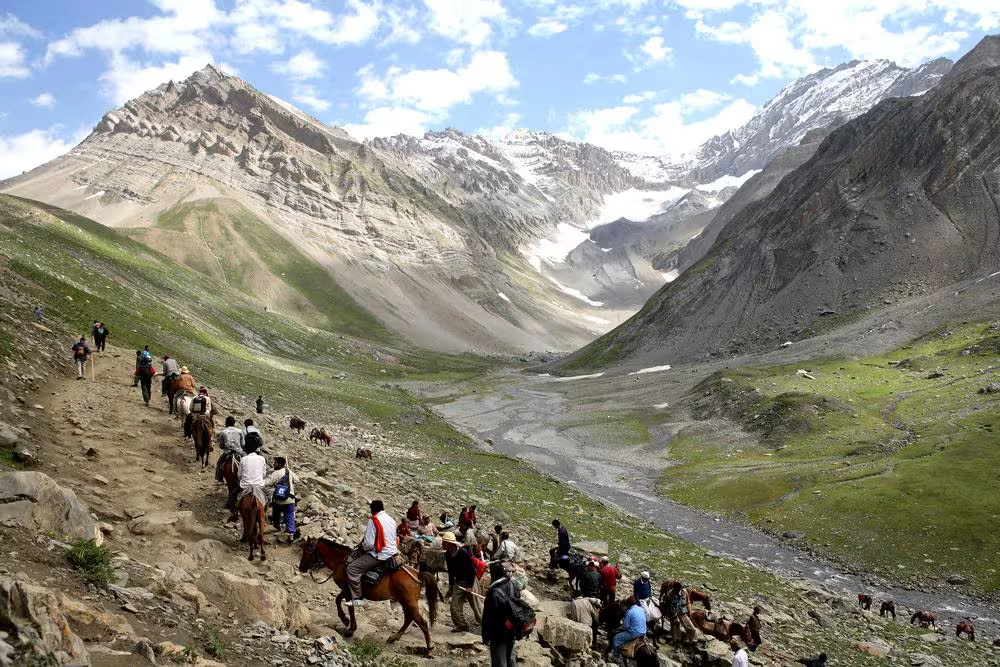
The Pahalgam route, on the other hand, stretches across roughly 46 to 48 kilometres, one way, and is the traditional path pilgrims have used for generations. It usually takes anywhere from 3 to 5 days to complete, depending on your pace and how many stops you take.
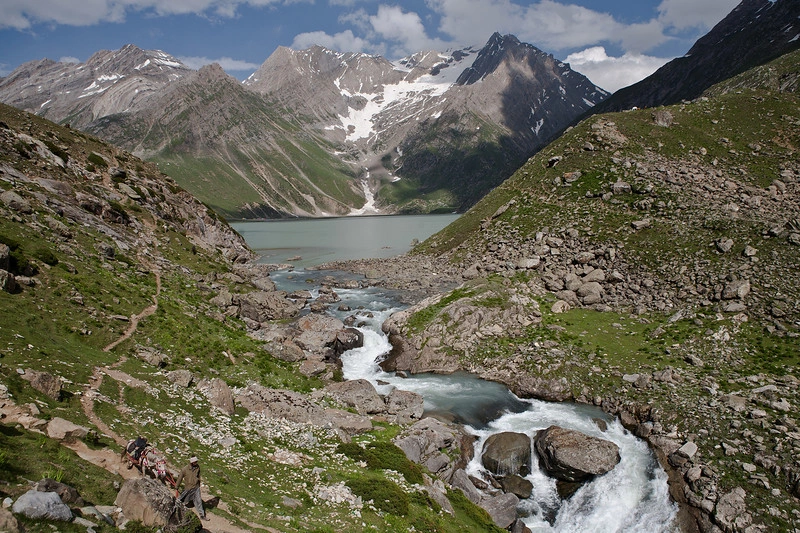
This route starts at Chandanwari, about 16 kilometres from Pahalgam town, and winds through some genuinely stunning stops: Chandanwari, Sheshnag Lake, and Panchtarni, before finally reaching the cave. Yes, that Sheshnag Lake Amarnath Trek stretch is exactly as beautiful as the postcards make it look — a glacial lake surrounded by snow-capped peaks that makes every aching muscle feel a little more worth it.
Baltal vs Pahalgam: A Side-by-Side Comparison
Since this is the question everyone actually wants answered, here’s a clean, simple table comparing both routes of the Amarnath Trek.
| Feature | Baltal Route | Pahalgam Route |
|---|---|---|
| Distance (one-way) | ~14 km | ~46–48 km |
| Trek Duration | 1–2 days | 3–5 days |
| Difficulty | Steep, physically demanding | Gradual, more manageable |
| Scenery | Shorter but dramatic | Longer, richer, more varied |
| Best For | Time-crunched pilgrims | Families, first-timers, slower pace |
| Key Stops | Domial, Sangam Top | Chandanwari, Sheshnag, Panchtarni |
Both routes end at the same 6-km stretch from Panchtarni to the cave, where helicopter services are also available for pilgrims who’d rather skip some of the walking altogether.
Is Amarnath Trek Difficult Than Kedarnath?
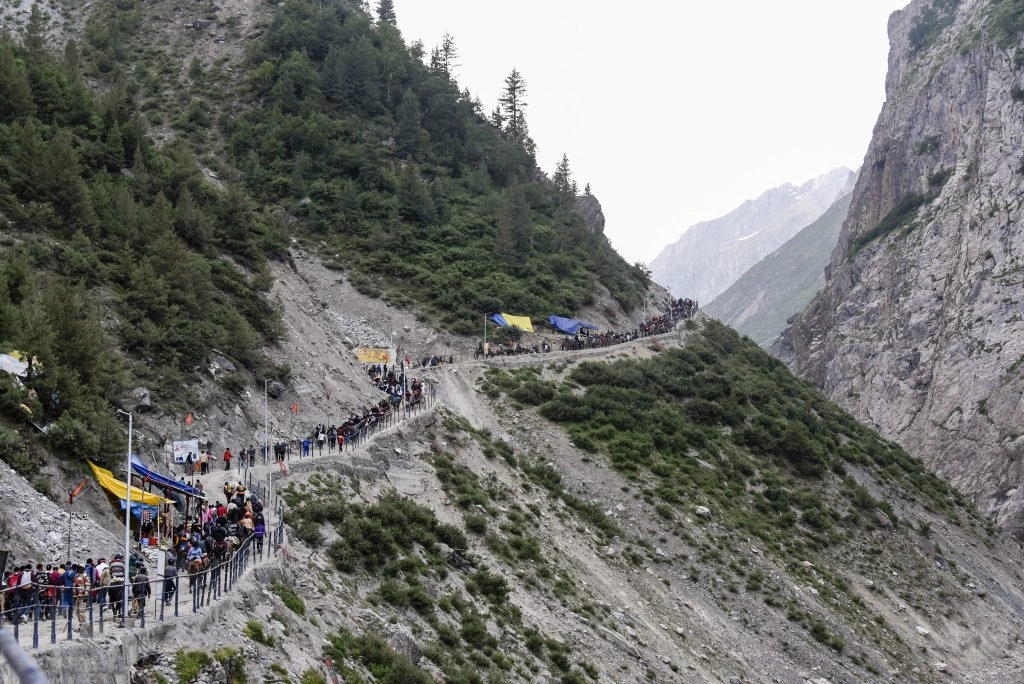
This comparison comes up constantly, so let’s address it honestly. The question “Is Amarnath Trek difficult than Kedarnath” doesn’t have a single neat answer, because it depends on the route and your fitness level.
Generally speaking, the Baltal route of the Amarnath Trek is considered steeper and more physically taxing over its shorter distance compared to the Kedarnath trek, which is around 16-18 km one-way but has a more gradual, steady incline. The Pahalgam route of Amarnath, being longer but gentler, is often seen as comparably challenging to Kedarnath, just spread over more days. Altitude sickness is a real risk on both, given the cave sits at nearly 12,756 feet.
Expert Insight: Trekking guides who work both routes each season often point out that fitness preparation matters more than which trek is “objectively harder.” A few weeks of regular walking, stair climbing, and light cardio before either trek genuinely reduces the risk of altitude-related discomfort.
Amarnath Temperature and Weather: What to Actually Expect
Let’s talk Amarnath Temperature, because packing wrong at this altitude isn’t just uncomfortable — it can be dangerous. During the day, temperatures typically hover between 15°C and 20°C, but nights can drop sharply, sometimes falling to 5°C or even below freezing.
If you’re wondering about the Weather in Amarnath Temple 10 days before your visit, here’s the honest answer: mountain weather here changes fast, sometimes within hours. Clear mornings can turn into sudden rain or even light snow by afternoon. That’s exactly why the Amarnath Shrine Board strongly advises checking real-time forecasts right before departure, rather than relying on any 10-day prediction as gospel.
| Season | Daytime Temp | Nighttime Temp |
|---|---|---|
| Yatra Months (July–August) | 15°C to 20°C | 5°C to -7°C |
| Peak Winter (closed season) | Below freezing | Often below -20°C |
Pack layers. Seriously. A warm jacket, thermal wear, and waterproof gear aren’t optional extras here — they’re essentials.
Amarnath Temple: The Legend Behind the Ice Shivling
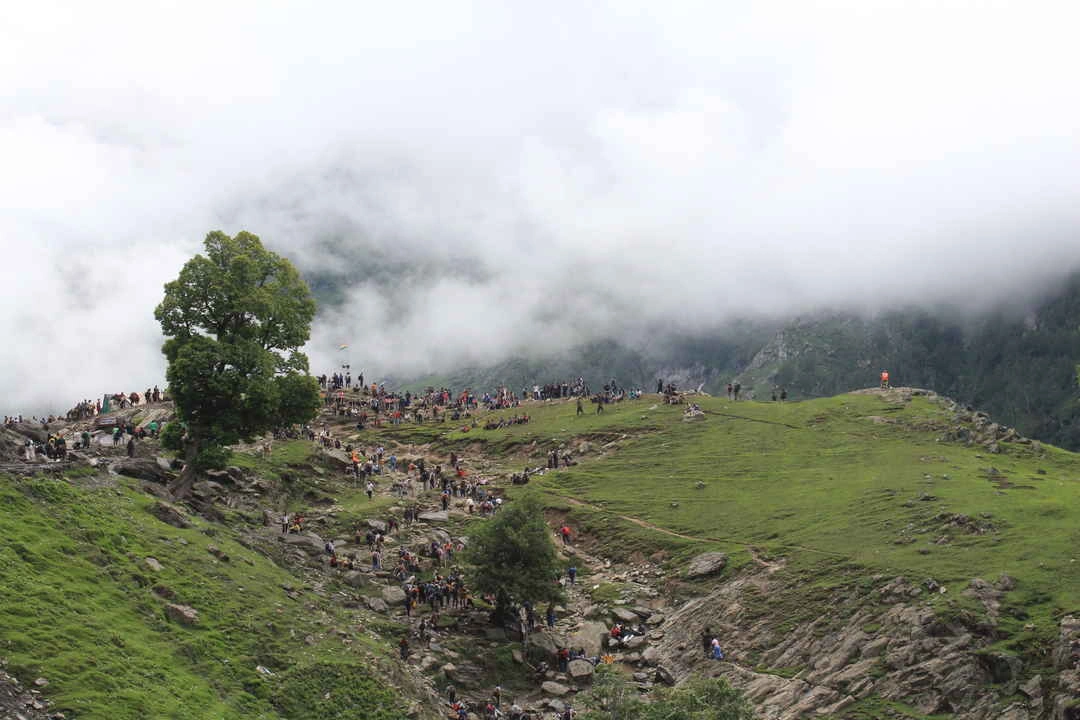
Now, let’s talk about what you’re actually walking all that distance for. Inside Amarnath Temple sits a naturally formed ice stalagmite, worshipped as the Amarnath Shivling — a Swayambhu, or self-manifested, form of Lord Shiva.
According to Hindu belief, this is the very cave where Shiva revealed the secret of immortality to Goddess Parvati. Legend has it a pair of pigeons inside the cave overheard the discourse and became immortal themselves — and pilgrims still occasionally report spotting pigeons near the cave even today. Alongside the main ice formation, two smaller ice structures are traditionally believed to represent Parvati and Ganesha.
Scientifically speaking, the Amarnath Shivling forms when water droplets seep through the cave’s limestone ceiling and freeze layer by layer on the cave floor, gradually building into an ice pillar. It typically reaches its fullest form around Shravan Purnima. Worth noting, though: the ice formation is genuinely sensitive to weather. In fact, reports from the 2026 yatra season noted the Shivling had shrunk by nearly 99% within the first five days due to unusually warm local temperatures — a reminder of just how fragile this natural wonder really is.
Inside Amarnath Temple: What Actually Happens During Darshan
Once you’ve covered the entire Amarnath Trek Distance and finally reach the cave, here’s what awaits inside Amarnath Temple: a queue system for darshan, security checks, and a genuinely emotional moment for most pilgrims as they finally see the ice formation they’ve trekked days to witness. Photography rules and timing can vary by year, so it’s worth checking current Amarnath Shrine Board guidelines before you go.
Amarnath Temple History: How Old Is This Pilgrimage, Really?
Amarnath Temple history stretches back centuries. Textual references to the cave appear in works composed as early as the 5th century, and according to legend, the cave was first discovered by the sage Bhrigu. It’s also considered one of the 51 Shaktipeethas, adding another layer of religious significance beyond its connection to Shiva.
Amarnath Temple is located in which state, you ask? Jammu and Kashmir — specifically in the Anantnag district, roughly 141 km from Srinagar.
Amarnath Yatra 2026: Registration, Dates, and What You Need
If you’re planning to actually do this, here’s what matters for Amarnath Yatra 2026:
- Amarnath Yatra 2026 Start Date: July 3, 2026, running until August 28, 2026 — a 57-day window.
- Amarnath Yatra 2026 Registration Online: Opened April 15, 2026, through the official SASB portal (jksasb.nic.in) or over 550 designated bank branches nationwide.
- Amarnath Yatra 2026 Medical Form: A Compulsory Health Certificate (CHC) is mandatory, issued by an SASB-authorised doctor, and must be dated on or after a specific cutoff announced each year — don’t get an old certificate, it won’t be accepted.
- Age Limits: Generally, pilgrims must be between 13 and 70 years old, and pregnant women beyond a certain number of weeks are not permitted, due to the physically demanding nature of the trek and high altitude.
Because exact fees and cutoff dates can shift slightly each year, always double-check the live details on the official Amarnath Shrine Board website before finalising your plans.
A Quick Word on Names That Sound Similar (But Aren’t the Amarnath Shrine)
Quick clarification, because search engines throw up some confusing results here: if you’ve stumbled across names like Mohinder Amarnath, Lala Amarnath, or Gudivada Amarnath while researching this topic, those are unrelated individuals — Mohinder Amarnath and his father Lala Amarnath are well-known figures from Indian cricket history, while Gudivada Amarnath is a name associated with Indian politics. None of them are connected to the Amarnath Temple pilgrimage. Just a classic case of shared names causing search confusion — happens more often than you’d think.
Amarnath Temple Reviews: What Do Pilgrims Actually Say?
Review: Across pilgrim accounts and travel forums, a few consistent themes show up. People frequently describe the Amarnath Trek as physically demanding but spiritually unforgettable — the kind of experience that tests your body while genuinely moving something in you emotionally. The Pahalgam route tends to get praised for its scenery, especially the Sheshnag Lake stretch, while the Baltal route gets credit for efficiency if you’re short on vacation days. Common feedback also flags the importance of proper acclimatisation, warm clothing, and not underestimating the altitude, regardless of your general fitness level.
Pahalgam Route: Stage-by-Stage Breakdown
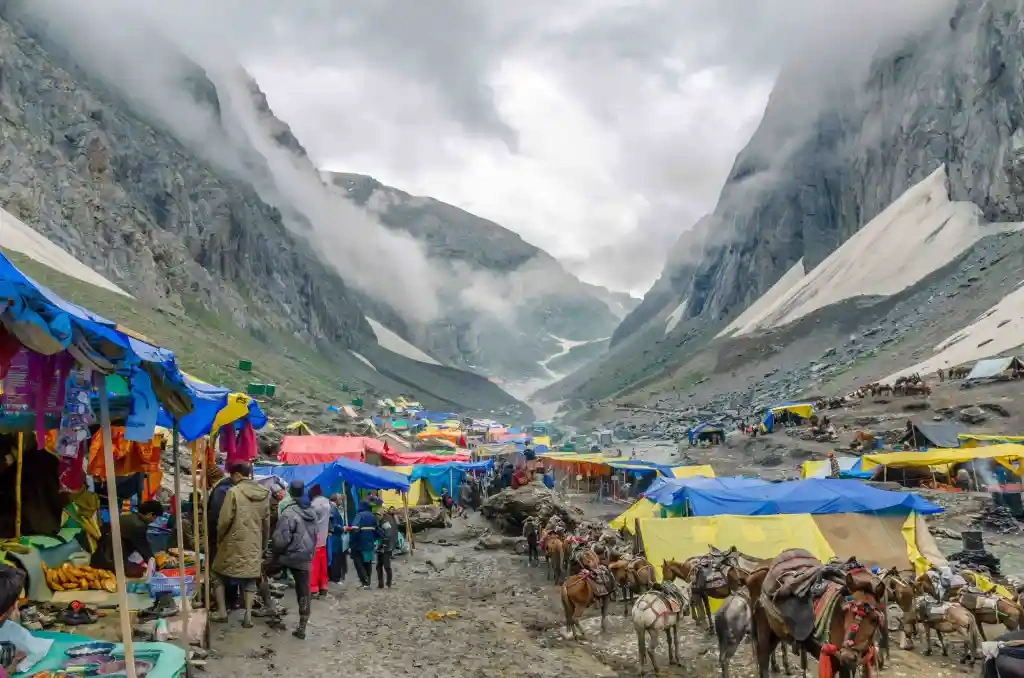
Curious what the Amarnath Trek Distance actually looks like, day by day, if you go via Pahalgam? Here’s a simple stage-wise table.
| Stage | Distance from Previous Stop | Altitude (approx.) | Notes |
|---|---|---|---|
| Pahalgam to Chandanwari | 16 km (usually by road) | 2,895 m | Trek officially starts here |
| Chandanwari to Sheshnag | 12 km | 3,590 m | Steep climb, includes Pissu Top |
| Sheshnag to Panchtarni | 13 km | 3,657 m | Crosses Mahagunas Pass |
| Panchtarni to Holy Cave | 6 km | 3,888 m | Final, relatively gentle stretch |
Add it up, and you get roughly 45-47 km of actual trekking distance, plus the 16 km road stretch to Chandanwari. That’s where the commonly quoted “46-48 km” figure for Amarnath Trek Km comes from.
Baltal Route: Stage-by-Stage Breakdown
Short doesn’t mean simple. Here’s how the Baltal side breaks down.
| Stage | Distance from Previous Stop | Notes |
|---|---|---|
| Baltal to Domial | ~4.5 km | Gradual start |
| Domial to Barari | ~2.5 km | Gets steeper here |
| Barari to Sangam Top | ~3 km | Toughest climb of the route |
| Sangam Top to Holy Cave | ~4 km | Descent, then final approach |
Total: around 14 km, but packed into a much shorter window than Pahalgam. That’s exactly why it feels tougher on the body, even though the number on paper looks smaller.
What Should You Actually Pack? A Simple Checklist
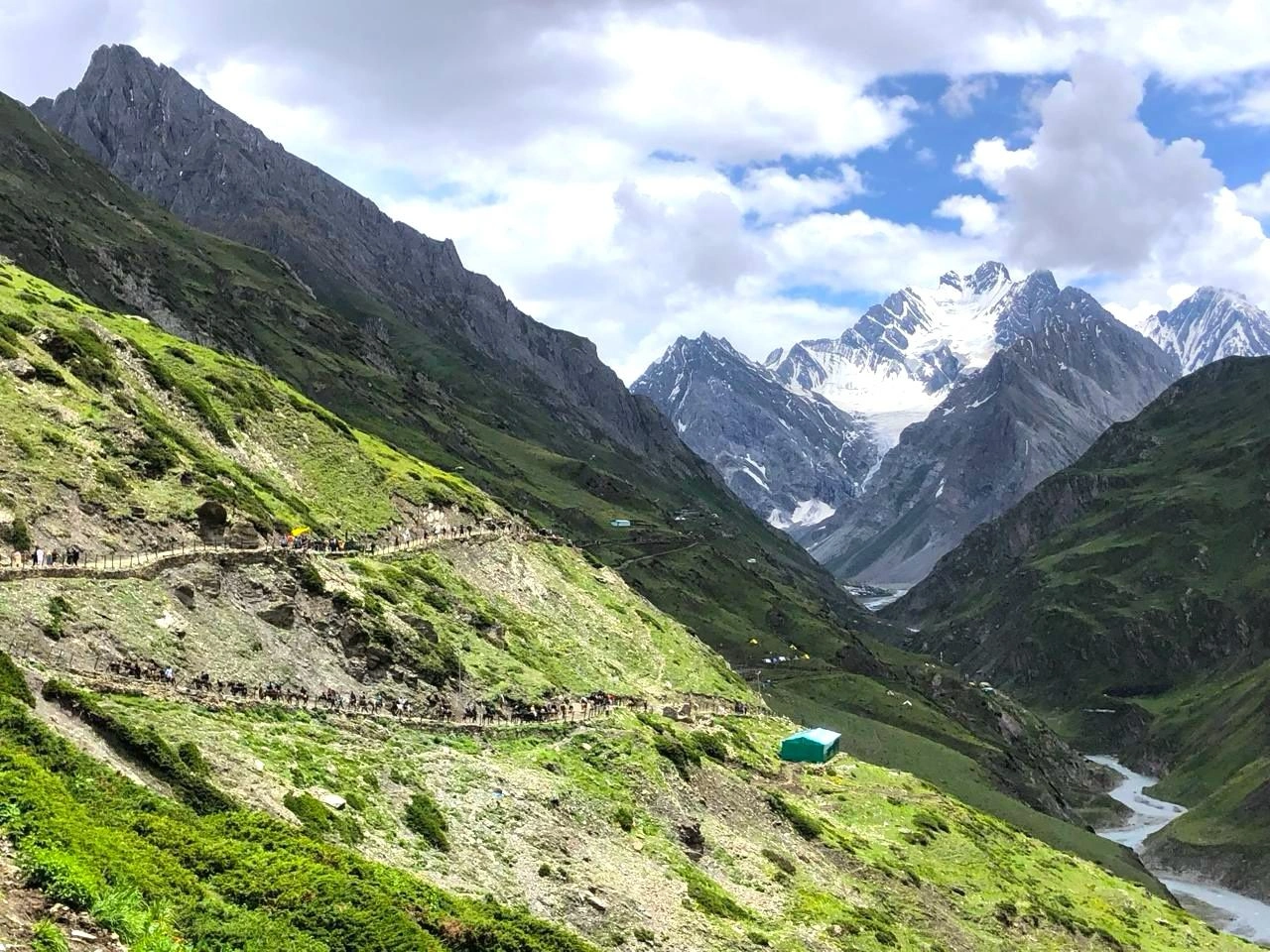
Getting the Amarnath Trek Distance right on paper is one thing. Surviving it comfortably is another. Here’s a quick packing table.
| Category | Items |
|---|---|
| Clothing | Thermal wear, warm jacket, waterproof outer layer, gloves, woolen cap |
| Footwear | Waterproof trekking shoes, extra socks |
| Health | CHC copy, personal medicines, ORS packets, basic first-aid |
| Gear | Walking stick/trekking pole, torch, raincoat or poncho |
| Documents | Yatra permit, ID proof, RFID card |
| Extras | Dry fruits, water bottle, sunscreen, sunglasses |
Simple rule of thumb: pack for both sunshine and snow. This route can throw both at you in the same afternoon.
Helicopter Option: Skipping Part of the Amarnath Trek Distance
Not everyone wants to walk the full Amarnath Trek Distance, and that’s completely fine. Helicopter services operate from both Baltal and Pahalgam (via Panchtarni), cutting down the walking distance significantly.
| Route | Helicopter Covers | You Still Walk |
|---|---|---|
| Baltal | Most of the distance | Short stretch near the cave |
| Pahalgam (via Panchtarni) | Panchtarni to near cave | Final 6 km stretch |
Booking early is essential, since seats fill up fast, especially during peak yatra weeks. This is a genuinely popular option for elderly pilgrims or anyone with limited trekking experience.
Common Mistakes First-Time Pilgrims Make
A few short, practical warnings, because these come up again and again:
- Underestimating altitude. Fitness at sea level doesn’t automatically translate to comfort at 12,756 feet.
- Skipping acclimatisation. Rushing straight up without a rest day increases the risk of altitude sickness.
- Packing too light on warm layers. Nights get cold fast, even in July and August.
- Ignoring official weather advisories. Conditions can change quickly; the Amarnath Shrine Board issues real-time updates for a reason.
- Booking last minute. Slots, permits, and helicopter seats fill up well before the season peaks.
Baltal vs Pahalgam: Which Should You Actually Choose?
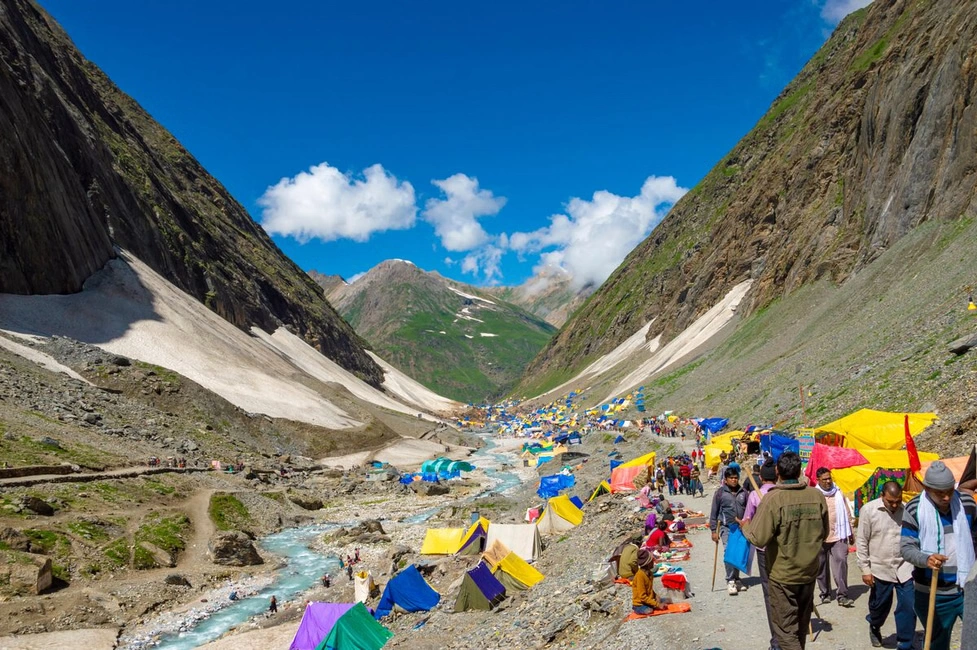
Still torn between routes? Here’s a simple way to decide.
| If You… | Choose |
|---|---|
| Have limited vacation days | Baltal |
| Prefer a gentler, scenic journey | Pahalgam |
| Are travelling with elderly family or kids | Pahalgam (or helicopter) |
| Are an experienced, fit trekker in a hurry | Baltal |
| Want the full traditional pilgrimage experience | Pahalgam |
There’s no universally “better” route — just the one that fits your body and your calendar better.
Amarnath Temple Height and Surrounding Peaks
Since Amarnath Temple height is a commonly searched detail, here it is clearly: the cave sits at approximately 3,888 metres, or 12,756 feet, above sea level. That’s higher than most popular Himalayan treks in India, which is exactly why altitude preparation matters so much here.
Notes From a Trail Guide: What Nobody Tells You
If you’ve ever chatted with a local Kashmiri guide who’s walked this route dozens of times, a few things come up again and again that don’t always make it into official brochures. Here’s that kind of on-ground wisdom, distilled simply.
On pacing: Guides consistently say the biggest mistake isn’t lack of fitness — it’s rushing the first two hours. Start slow. Your body needs time to adjust to the thinning air, and pushing hard early almost always backfires later.
On ponies and palanquins: Both routes offer pony and palanquin (doli) services for pilgrims who can’t walk the full Amarnath Trek Distance. Guides recommend booking these only through officially registered operators, since unregistered ones can charge unpredictable rates mid-route.
On the “golden hour”: Early morning starts, ideally before sunrise, are strongly preferred by experienced guides. The trail is cooler, less crowded, and weather is generally more stable than in the afternoon, when clouds and rain tend to roll in.
On rest stops: Langars (community food camps) are set up all along both routes, run by volunteer organisations. Guides suggest using them not just for food, but as natural pacing checkpoints — if you’re too breathless to eat comfortably at a langar, that’s usually a sign to slow down.
On the final stretch: Almost every guide says the same thing about the last kilometre before the cave: it feels longer than it is. Altitude, anticipation, and fatigue all combine to play tricks on your sense of distance. Take it slow — you’re almost there.
Final Thoughts
At the end of the day, the Amarnath Trek Distance boils down to two solid choices: roughly 14 km if you go via Baltal, or around 46-48 km if you take the traditional Pahalgam route. Neither is “easy,” but neither is impossible either — thousands of pilgrims, from fit trekkers to elderly devotees, complete this journey every single year. What matters most is picking the route that fits your fitness, your schedule, and how you want to experience this incredible pilgrimage. Whichever path you choose, register early, pack smart, and respect the mountain — it commands that much, at the very least.
Thank you so much for reading! Safe travels, and may your trek be smoother than your search history suggests. Check out our previous blogs.
Read More :
Frequently Asked Questions
1. What is the Amarnath Trek Distance?
It depends on the route: approximately 14 km one-way via Baltal, or roughly 46–48 km one-way via the traditional Pahalgam route.
2. How long is Amarnath Trek in terms of days?
The Baltal route usually takes 1–2 days, while the Pahalgam route typically takes 3–5 days.
3. Is Amarnath Trek difficult than Kedarnath?
It varies by route. The Baltal route is steeper over a shorter distance, while the Pahalgam route is longer but gentler — both come with real altitude challenges, similar to Kedarnath.
4. What is the Amarnath Temperature during the yatra season?
Daytime temperatures typically range from 15°C to 20°C, while nights can drop to 5°C or below freezing.
5. When does Amarnath Yatra 2026 start?
The Amarnath Yatra 2026 begins on July 3, 2026, and concludes on August 28, 2026.
6. How do I complete Amarnath Yatra 2026 Registration Online?
You can register through the official SASB portal (jksasb.nic.in) or the SASB mobile app, submitting ID proof, a photograph, and a valid medical certificate.
7. Where is Amarnath Temple located?
It’s located in the Anantnag district of Jammu and Kashmir, roughly 141 km from Srinagar, at an altitude of about 3,888 metres.
8. Can I skip walking the full Amarnath Trek Distance?
Yes, helicopter services are available from both Baltal and Pahalgam (via Panchtarni), significantly reducing the walking distance for pilgrims who need it.
9. What is the Amarnath Temple height above sea level?
The cave shrine sits at approximately 3,888 metres, or 12,756 feet, above sea level.
You can also visit trysimpledesign for creative website design, development, and digital solutions tailored to businesses and startups.
