
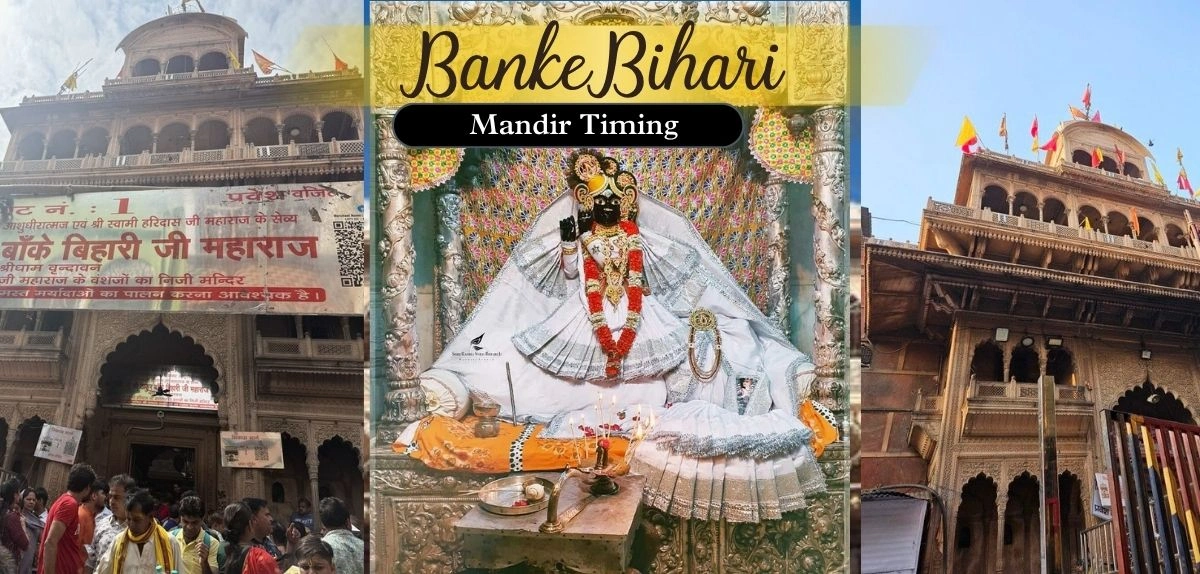
Last Updated: July 20, 2026
Let’s be real for a second — you’ve probably typed “Banke Bihari Mandir Timing” into Google at least twice today, panicking about whether you’ll reach Vrindavan in time or end up staring at a closed gate for two hours. Relax. Grab your chai (or your bag, if you’re already halfway to Mathura), because we’re about to make this the last confusing search you’ll ever do about this temple.
This is your fun, honest, fact-checked guide to Banke Bihari Mandir Timing — no fluff, no outdated info, just what you actually need to plan a smooth, peaceful darshan.
Disclaimer: Temple timings, distances, and project details mentioned in this article are based on publicly available and currently reported information. Timings may change during festivals or due to administrative updates, so please verify with official or local sources before planning your visit.
Quick Answer: Banke Bihari Mandir Timing At A Glance
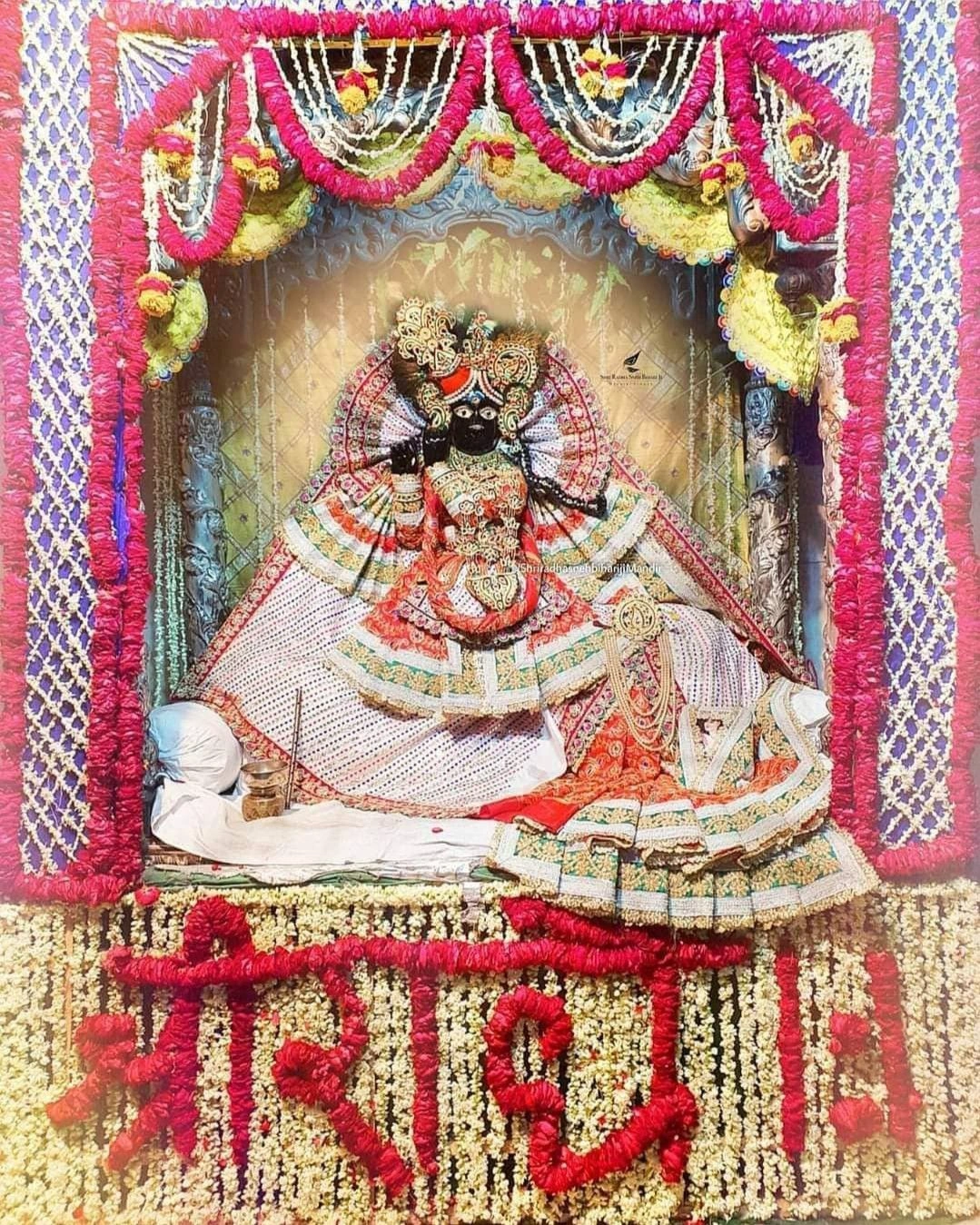
If you’re in a rush (understandable, Vrindavan traffic waits for no one), here’s the short version.
| Season | Morning Darshan | Evening Darshan |
|---|---|---|
| Summer (March–October) | 7:45 AM – 12:00 PM | 5:30 PM – 9:30 PM |
| Winter (November–February) | 8:45 AM – 1:00 PM | 4:30 PM – 8:30 PM |
That’s the official Banke Bihari Mandir Timings you’ll want to bookmark. Entry is completely free, there’s no paid VIP darshan option, and the temple shuts its doors for a long afternoon break both seasons — more on why that happens in a bit, because it’s actually a sweet reason.
What Exactly Is Banke Bihari Mandir?
Before we go deeper into timings, let’s talk about why millions of people make the trip to this one specific temple every single year.
Banke Bihari Mandir, located in the heart of Banke Bihari Mandir Vrindavan, is one of the most beloved Krishna temples in India. Here, Lord Krishna is worshipped in his enchanting form as Banke Bihari Ji — “Banke” meaning bent in three places, and “Bihari” meaning the supreme enjoyer. The deity was originally installed by the saint Swami Haridas in the 16th century, and the temple has been drawing devotees ever since.
Unlike most temples where you get one long, steady look at the deity, Banke Bihari Temple does things differently — and it’s honestly part of the magic.
Why Does Banke Bihari Temple Have Such Unusual Timings?
Okay, here’s the fun bit that surprises first-time visitors. Most North Indian temples follow a similar rhythm — morning aarti, open through the day, evening aarti. Banke Bihari Temple Vrindavan, however, marches to its own beat entirely.
There’s no formal Mangala Aarti here (the ritual of waking the deity early morning). Why? Because tradition holds that Lord Krishna should not be woken up abruptly — he’s allowed to rest, undisturbed, just like you’d let a beloved family member sleep in peace. That’s also exactly why the temple shuts for a long stretch every afternoon, usually five to six hours in summer. It’s not administrative laziness — it’s devotion, plain and simple.
Instead of a fixed-interval aarti schedule, the temple follows something called “Jhanki Darshan.” A curtain (called the “parda”) is drawn in front of the deity every few minutes throughout darshan hours, then briefly opened again. Devotees get glimpses rather than one continuous view. It sounds unusual on paper, but standing there and experiencing it feels genuinely different — almost like the anticipation is part of the prayer itself.
Banke Bihari Mandir Timing: Season-Wise Breakdown
Let’s go a little deeper than the quick table above, because the small details actually matter here.
Summer schedule (March to October): Morning darshan runs from 7:45 AM to 12:00 PM, and evening darshan resumes at 5:30 PM, continuing until 9:30 PM. This is the Banke Bihari Temple Opening Time you should plan around if you’re visiting between March and October.
Winter schedule (November to February): Since the days are shorter and mornings colder, the temple shifts slightly later. Darshan opens at 8:45 AM, runs till 1:00 PM, then reopens at 4:30 PM until 8:30 PM.
One thing worth remembering: Banke Bihari Temple Timings Today can shift slightly around major festivals like Janmashtami, Holi, and Ekadashi, when darshan hours are often extended to accommodate the massive crowds. Always double-check the temple’s official updates or a trusted local source before you travel on a festival date.
Expert Insight
According to local temple guides and Vrindavan-based tour operators, the golden rule for a peaceful visit is simple: arrive within the first 90 minutes after opening, especially on weekdays. Weekends and festival days see crowds multiply several times over, sometimes crossing lakhs of visitors in a single day, which is exactly why timing your visit right matters more here than at almost any other temple in Vrindavan.
Best Time to Visit for a Peaceful Darshan
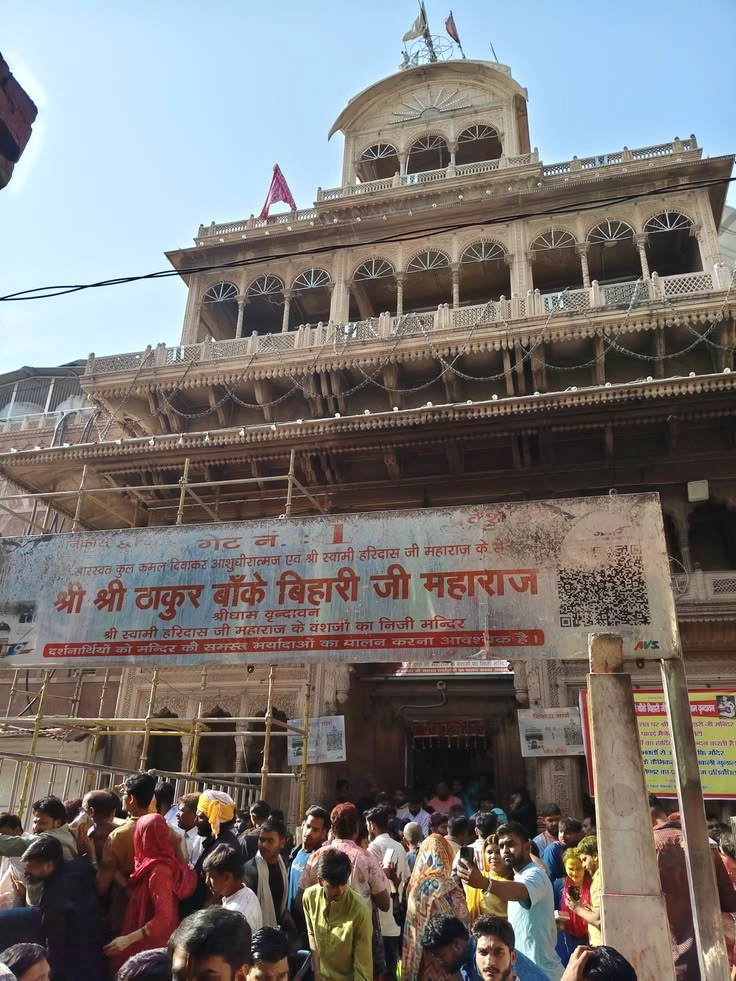
If you genuinely want a calm, unrushed experience (rather than being gently shoved along by a sea of devotees), here’s the honest advice:
- Visit on a weekday, not a weekend
- Arrive right at the morning opening time
- Avoid major festival dates unless you specifically want the festive energy and don’t mind the crowd
- Keep your visit outside peak tourist season (October to March tends to be busier due to pleasant weather)
The Banke Bihari Temple Crowd situation is very real, especially on weekends, when footfall can cross several lakh visitors. The narrow lanes leading up to the temple, locally called Kunj Galiyan, can get packed shoulder-to-shoulder. It’s part of the charm for some, overwhelming for others — know yourself before you plan.
The Banke Bihari Corridor: What’s Changing?
Here’s something worth knowing before your visit. The Banke Bihari Corridor project is a major redevelopment initiative approved by the Supreme Court and the Uttar Pradesh government, designed to widen the extremely narrow access lanes around the temple and improve crowd safety after repeated stampede-like situations on busy weekends.
The plan involves acquiring roughly five acres of land around the temple, creating wide pedestrian pathways, a riverfront connection to the Yamuna, and modern amenities like parking and medical assistance — similar in spirit to the Kashi Vishwanath Corridor in Varanasi. As of mid-2026, the project has secured approvals and completed some initial land registrations, though full construction is still a work in progress, with local resident concerns slowing parts of the process. Once complete, it’s expected to significantly change how devotees experience their visit, hopefully making the darshan queues far less chaotic.
Getting There: Distances You Should Know
Planning your day trip around Vrindavan? Here’s a quick distance cheat sheet.
| Route | Approximate Distance |
|---|---|
| Mathura to Banke Bihari Temple Distance | Around 10–12 km |
| Prem Mandir to Banke Bihari Temple Distance | Around 3–4 km |
| Banke Bihari Temple to Prem Mandir Distance | Around 3–4 km (same route, reverse direction) |
Most pilgrims combine a Banke Bihari visit with Prem Mandir, ISKCON Vrindavan, and sometimes a quick trip into Mathura to cover Krishna Janmabhoomi. Since Banke Bihari Temple closes for those long afternoon hours, that gap is actually the perfect window to slot in a Prem Mandir visit, since it stays open through the afternoon.
How to Reach Banke Bihari Mandir
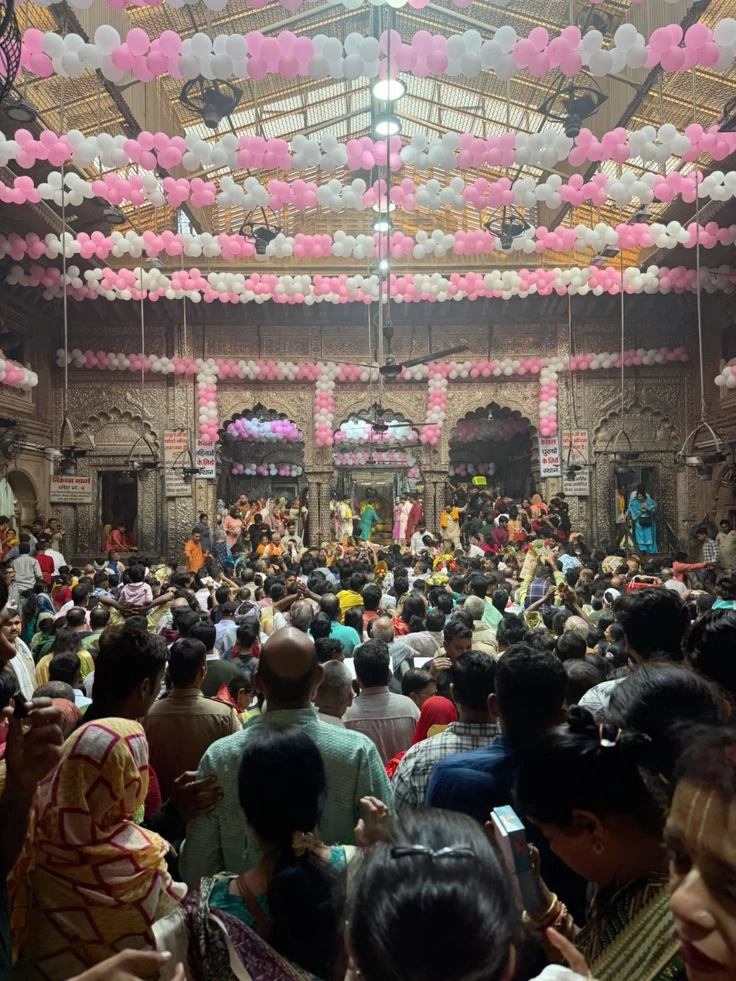
Getting to Banke Bihari Mandir Vrindavan is easier than most people expect, since Vrindavan sits well-connected to major North Indian cities. Here’s a quick breakdown by mode of travel.
| Mode of Travel | Details |
|---|---|
| By Air | Nearest airport is Agra (approx. 65–70 km); Delhi’s IGI Airport is around 150–160 km away |
| By Train | Mathura Junction is the closest major railway station, about 10–12 km from the temple |
| By Road | Well connected via NH19 from Delhi (approx. 3.5–4 hours) and from Agra (approx. 1.5–2 hours) |
| Local Transport | Autos, e-rickshaws, and cycle rickshaws easily available from Mathura station to the temple lane |
Most devotees flying in land at Delhi and take a cab or bus straight to Vrindavan, since the drive is smooth for most of the route. If you’re coming from Agra after visiting the Taj Mahal, it’s a short, easy detour.
Where to Stay Near the Temple
If you’re staying overnight (which honestly makes the whole trip far less stressful than a rushed day visit), there are plenty of Hotels in Vrindavan Near Banke Bihari Temple ranging from simple budget stays to more comfortable mid-range options. Booking a Hotel Near Banke Bihari Temple within walking distance means you can easily catch both the morning and evening darshan without fighting traffic twice in one day. Most Hotel in Vrindavan Near Banke Bihari Temple options are within a 10–15 minute walk of the main temple lane, which is genuinely convenient given how congested vehicle access can get during peak hours.
Banke Bihari Temple Tickets and Treasury
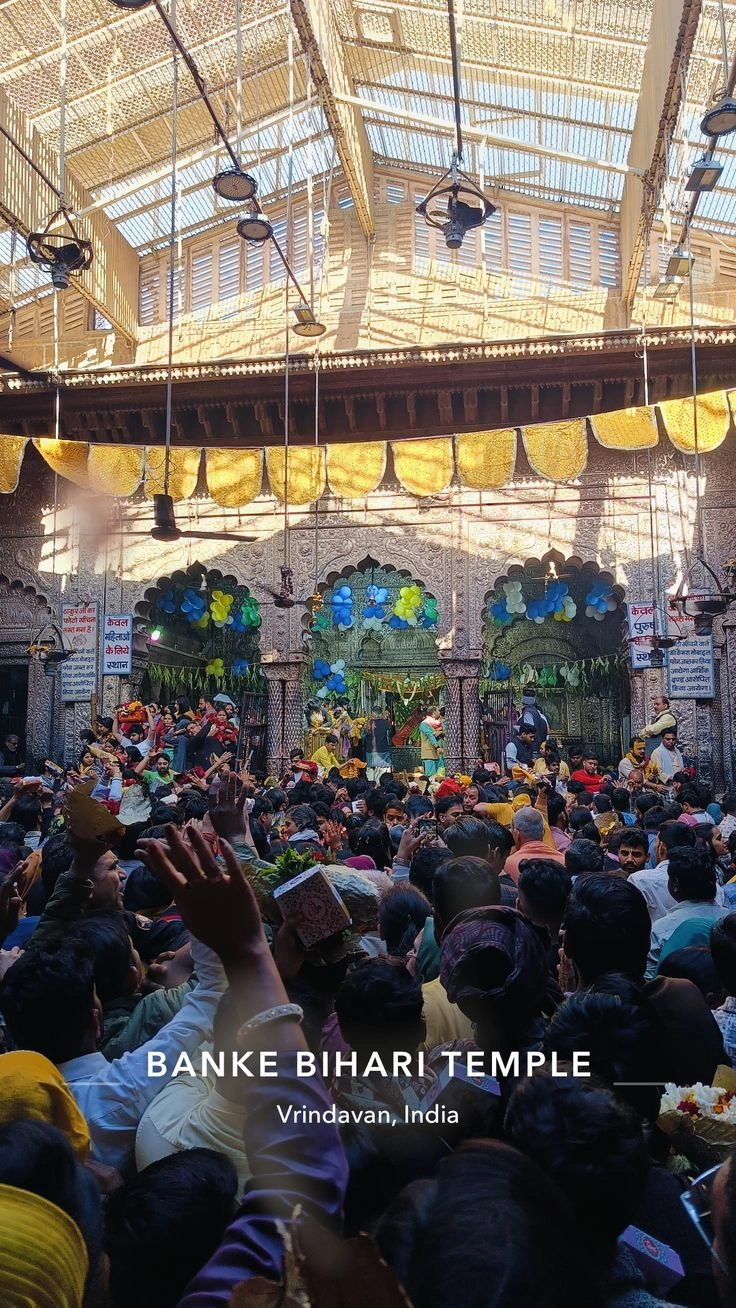
Good news for your wallet — there are no Banke Bihari Temple Tickets required for regular darshan. Entry is completely free for everyone, and there’s no official paid VIP darshan pass, despite what some touts near the temple lane might try to tell you. Politely walk past anyone offering a “special skip-the-line pass” for cash.
As for the Banke Bihari Temple Treasury, like most major temples in India, it receives substantial devotional offerings and donations from pilgrims throughout the year. Interestingly, when the Supreme Court approved the corridor redevelopment project, it permitted the land acquisition to be funded using donations from the temple’s own treasury rather than through additional public spending, which shows just how significant these devotional contributions actually are.
Mere Banke Bihari Lal: The Devotional Connection
If you’ve ever heard devotional bhajans playing near the temple lane, chances are you’ve heard some version of “Mere Banke Bihari Lal” lyrics floating through the air. These devotional songs are a huge part of the temple’s atmosphere, sung by both visiting devotees and local kirtan groups. We won’t reproduce the lyrics here out of respect for copyright, but you’ll find plenty of beautiful renditions on YouTube and devotional music platforms if you want to get into the mood before your trip.
Capturing the Moment: Banke Bihari Images
A quick heads-up if you’re hoping to click photos: photography inside the sanctum is generally restricted, out of respect for the sanctity of the jhanki darshan tradition. If you’re looking for Banke Bihari Images for personal or devotional use, your best bet is official temple trust sources or respectful devotee-shared content online, rather than trying to sneak a phone photo mid-darshan (trust us, the temple staff notice).
Nearby Temples and Attractions to Cover
Since you’re already making the trip, it makes sense to club a few more sacred spots around Banke Bihari Temple Vrindavan into your itinerary. Here’s a quick reference table.
| Attraction | Approx. Distance from Banke Bihari Temple | Best Time to Visit |
|---|---|---|
| Prem Mandir | 3–4 km | Evening, for the light and fountain show |
| ISKCON Vrindavan | 3–4 km | Morning Mangala Aarti (around 4:30 AM) |
| Radha Raman Temple | Less than 1 km | Late morning |
| Nidhivan | Less than 1 km | Before sunset only, gates close early |
| Seva Kunj | Less than 1 km | Late afternoon |
| Krishna Janmabhoomi, Mathura | 10–12 km | Morning or evening darshan |
Since Banke Bihari Temple closes in the afternoon, this is genuinely the smartest time to squeeze in Prem Mandir or a quick Mathura visit, rather than sitting around waiting for the evening darshan to open.
Festival Days: How Timings Change
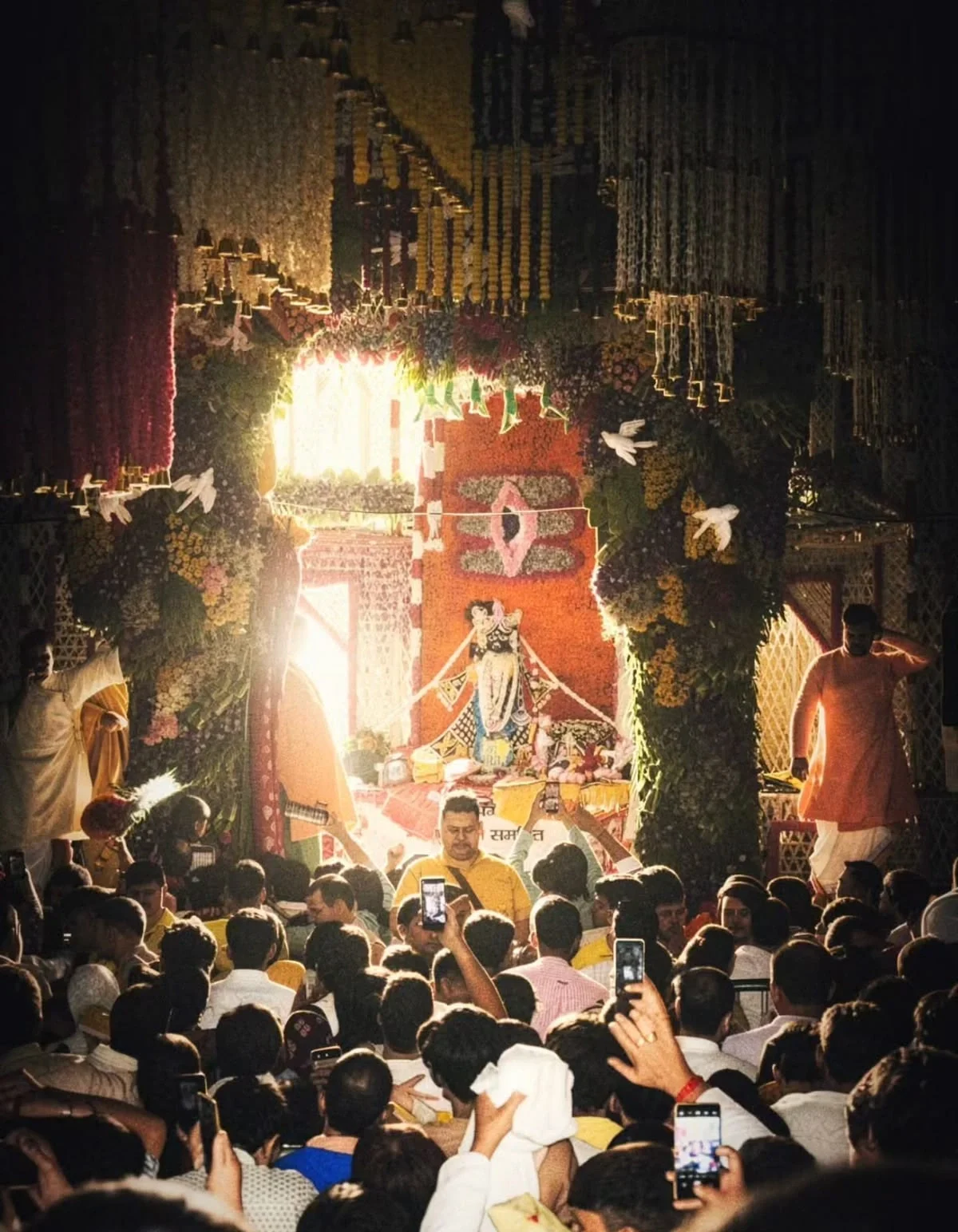
Festivals are where the standard Banke Bihari Mandir Timing goes out the window a little, in the best way. Here’s what to generally expect, though exact hours can shift year to year, so always confirm closer to your travel date.
| Festival | Typical Timing Change |
|---|---|
| Janmashtami | Special midnight Aarti performed; darshan hours extended significantly |
| Holi | Extended morning and evening darshan due to massive crowds |
| Ekadashi | Slightly extended hours; heavier footfall than regular days |
| Sharad Purnima | Special evening darshan with extended hours |
| Nidhivan Vihar Utsav | Unique local celebration with adjusted evening timings |
If your trip lines up with any of these, expect the narrow lanes around the temple to be significantly more crowded than a regular weekday, so plan your arrival even earlier than usual.
Our Review
Having pulled together data from multiple current travel and pilgrimage sources, we can confidently say the Banke Bihari Mandir Timing structure — while unusual compared to most Indian temples — is remarkably consistent and well-documented. The seasonal shift between summer and winter schedules is reliable, and the biggest variable pilgrims should actually worry about isn’t the timing itself, but crowd density on weekends and festivals.
Conclusion
At the end of the day, visiting Banke Bihari Mandir isn’t just about ticking off a location on your Vrindavan itinerary — it’s about experiencing one of India’s most unique darshan traditions. Once you’ve got the Banke Bihari Mandir Timing sorted, the rest genuinely falls into place. Go early, go on a weekday if you can, and let the whole “curtain darshan” experience surprise you the way it has surprised millions before you.
Thank you so much for reading! We hope this makes your Banke Bihari Mandir Timing planning stress-free. Check out our previous blogs.
Read More :
Frequently Asked Questions
Q1. What is the current Banke Bihari Mandir Timing?
Summer (March–October): 7:45 AM–12:00 PM and 5:30 PM–9:30 PM. Winter (November–February): 8:45 AM–1:00 PM and 4:30 PM–8:30 PM.
Q2. Is there an entry fee for Banke Bihari Temple?
No. Darshan is completely free, and there’s no official paid VIP darshan pass.
Q3. Why does the temple close in the afternoon?
Tradition holds that the deity rests during afternoon hours, so the temple closes for several hours daily as part of that devotional practice.
Q4. What is the distance from Mathura to Banke Bihari Temple?
Roughly 10–12 km, easily covered by auto, cab, or local transport.
Q5. Is photography allowed inside the temple?
No, photography inside the sanctum is generally not permitted out of respect for the darshan tradition.
Q6. What is the Banke Bihari Corridor project?
It’s a government-approved redevelopment initiative to widen the narrow lanes around the temple, improve crowd safety, and add modern pilgrim facilities.
You can also visit trysimpledesign for creative website design, development, and digital solutions tailored to businesses and startups.
